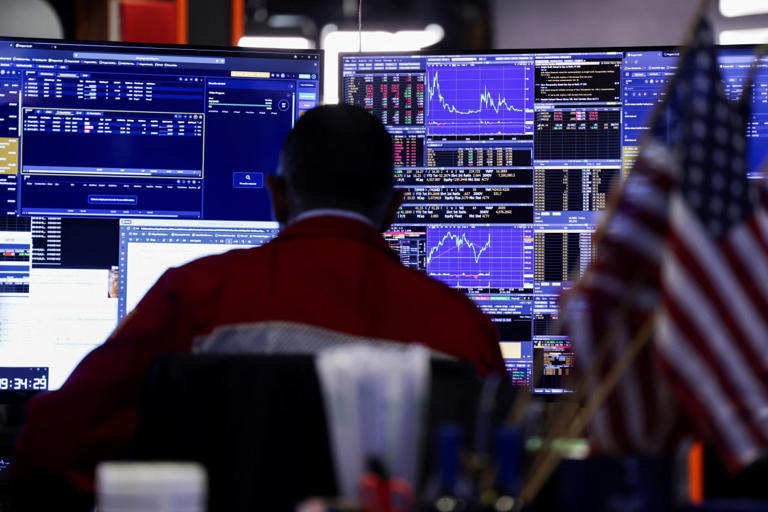
U.S. stock futures rose slightly on Friday, with traders preparing to jump over before vital inflation data that may assist influence the ultimate Fed interest rate determination of the year. The traders are keeping a close eye on whether new signs will support expectations of a rate cut next week after a rocky start to December following conflicting economic signals.
Dow Jones Industrial Average futures contracts rose 9 points, or 0.02 percent, and S&P 500 futures contracts rose 0.18 percent. The Nasdaq 100 futures increased by 0.37%, which was backed by the resurgence of mega-cap technology stocks.
The small increase occurs after a lackluster but promising Thursday trade with the S&P 500 and Nasdaq Composite gaining modestly, and the Dow gaining by nearly nothing. The technology-oriented Nasdaq gained its eighth straight positive day in nine days, with a 3.4% gain in Meta Platforms and a 2.1% increase in Nvidia, which supports the rising dependence of the market on high-growth technology stocks.
Investors Brace for PCE Report After Fed Meeting Delay
Markets are entering Friday with heightened anticipation. It is the Personal Consumption Expenditures (PCE) index, the preference of the Federal Reserve in working with indicators of inflation. The Commerce Department will also publish September consumer spending and income, and also inflation, with backdates added, the first comprehensive report since the monumental U.S. government shutdown earlier this year.
The report comes at a crucial time. The Fed has another policy meeting on December 10, and investors are speculating a rate cut strongly. Market participants are betting that the central bank will reduce interest rates by 25 basis points, according to the CME FedWatch Tool, which is a sharp increase in expectations only weeks ago (87 per cent).
However, conflicting economic signals have kept traders cautious. “The data is mixed that we’re getting, and you’re seeing different signals. Inflation is still sticky where it is,” said Sonali Basak, chief investment strategist at iCapital, during an appearance on CNBC’s Closing Bell. She added that the outlook for 2026 remains unusually uncertain: “If the labor market tips over, then you’re in a pretty sticky spot next year.”
Labor Market Sends Conflicting Signals
The economic statistics of the week still show a complex picture of the American workforce. According to a report by job placement firm Challenger, Gray and Christmas, more than 1 million jobs were eliminated in 2025 due to corporate restructuring, artificial intelligence, and tariff pressures. The number of layoffs is increasing, and it is pointing to the fact that firms are not confident even with strong consumer spending.
Yet other data points tell a different story. Weekly jobless claims released on Thursday showed unemployment insurance applications falling to their lowest level since September 2022. The stronger-than-expected reading did little to dampen market sentiment but added to the puzzle analysts are struggling to solve.

The labor market’s puzzling resilience despite rising layoffs has led economists to adopt the “low hire–low fire” description for current conditions. Companies appear hesitant to expand staffing but equally reluctant to reduce headcount deeply, creating an environment full of contradictory signals.
Stocks Attempt Weekly Gains Amid December Volatility
Despite the uncertainty, stocks are on course to finish the week with slight gains. The S&P 500 is up 0.1% for the week, while the Nasdaq has advanced nearly 0.6%. The Dow has added around 0.3%.
Market watchers say the action reflects cautious optimism — investors are hopeful inflation is cooling enough for the Fed to ease policy, but wary that any upside surprise in the PCE report could reignite volatility.
“Markets are trying to balance near-term optimism with realistic concerns about sticky inflation,” said one New York-based equity strategist. “A soft PCE number could solidify a rate cut, but a hot reading might quickly reverse this week’s gains.”
Citigroup Urges ‘GARP’ Approach as AI Enthusiasm Splits Tech Sector
With the AI boom continuing to drive investor interest — and fears of a bubble rising — Citigroup analysts are recommending a strategy shift toward GARP: Growth at a Reasonable Price.
Drew Pettit, U.S. equity strategy director at Citi, noted a growing divide between winners and laggards in the tech sector, particularly after a volatile November. The Nasdaq Composite has underperformed the S&P 500 over the past month, raising questions about whether the AI trade is becoming overextended.
“It’s not really about hedging as much as it is actually stock selecting within AI,” Pettit said on CNBC’s The Exchange. Citi recently published a curated basket of companies it believes offer solid AI exposure without the stretched valuations plaguing some mega-caps.
Earnings Movers: Ulta Beats, HPE Misses, SoFi Drops on Share Sale
Several companies made notable moves during Thursday’s after-hours session:
Ulta Beauty
The beauty retailer is up almost 6% after exceeding the expectations of quarterly earnings and increasing its full-year revenue outlook to 12.3 billion, which is higher than the consensus of 12.13 billion. Ulta also increased its same-store sales growth outlook to 4.4 percent -4.7 percent, indicating high consumer demand in the run-up to the holidays.
Hewlett Packard Enterprise (HPE)
The HPE stocks dropped by approximately 8 percent following an announcement of the company failing to meet Wall Street revenue forecasts of 9.68 billion against 9.94 billion. However, earnings were higher than expected by analysts.
SoFi Technologies
SoFi’s stock tumbled more than 5% following news of a $1.5 billion public offering of common stock — a move that typically pressures share prices in the short term.
Looking Ahead: Inflation Data Could Set the Tone for December Trading
Friday’s economic releases could have meaningful implications for the market’s trajectory in the final month of the year. A softer-than-expected PCE reading may give investors more confidence that the Fed is prepared to pivot toward easing — a sentiment that could fuel a year-end rally.
But any surprise to the upside could jolt markets, reviving fears that inflation remains stubbornly high and extending the Fed’s higher-for-longer stance into 2026.
For now, Wall Street is treading cautiously, bracing for the data that could determine whether December’s early instability gives way to a more stable finish — or a fresh bout of volatility.