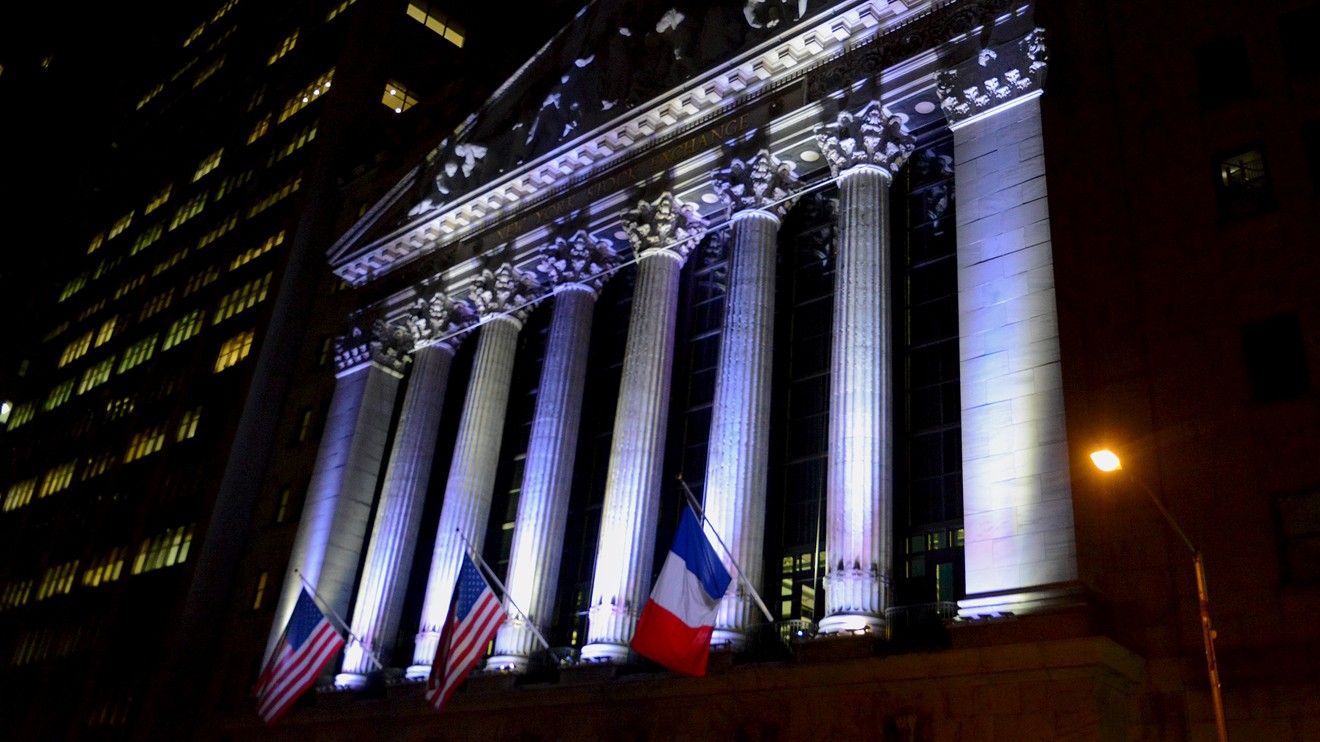
The U.S. stocks reached new highs on Thursday, as the market rally that took place following the Federal Reserve persisted, even as key technical players collapsed due to new concerns regarding the efficiency of the artificial intelligence trade. Both the S&P 500 and the Dow Jones Industrial Average closed at new all-time highs, and the Russell 2000 was not left out since it also closed at a record level.
Tech Slips as Oracle Warning Drags AI Names
The hype that had driven the markets to their intraday returns soon collapsed in the tech market. On Wednesday, Oracle stock decreased by nearly 11 percent as the company reported a decrease in earnings per quarter below expectations. That disappointment spanned the whole AI ecosystem to sink massive semiconductor giants Nvidia and Micron. The rebounded frailty was an indication that investors were reconsidering the justifiability of the high valuations in the AI space based on near-term performance.
Another semiconductor supply chain heavyweight, Broadcom, was also pressurized. Although the firm surpassed the Wall Street predictions on its revenue and earnings, its stock dropped 4.5 percent during extended trading. CEO Hock Tan struck an upbeat tone on the company’s long-term AI prospects but stopped short of directly addressing mounting concerns about customer concentration.
Analysts have become increasingly vocal about the possibility that Google, Broadcom’s largest customer, could ramp up efforts to design more chips in-house, threatening a key revenue stream. Rising memory costs have also introduced margin risks, and doubts surfaced about the binding nature of the company’s chip agreement with OpenAI.
The combination of Oracle’s surprise miss and questions swirling around Broadcom was enough to send the Nasdaq Composite down 0.26 percent for the day, even as other major indexes marched higher. The divergence underscored a rotation taking place across sectors, with investors moving capital out of megacap tech and into areas expected to benefit more from the Fed’s recent interest rate cut and signs of broader economic resilience.
Investors Rotate Into Financials as Broader Market Shines
With AI stocks struggling, investors turned their attention to other corners of the market that stood to gain from Wednesday’s quarter-percentage-point rate cut by the Federal Reserve.
Specifically, Financials performed better. The S&P 500 financial sector reached a fresh closing high, boosted by super gains in Visa and Mastercard. The reduced rates are more likely to boost consumer spending and volume of payments, and credit-card giants are in a good place to cash in on it.
The overall optimism was based on the communication by the Fed that, although it was giving out what some analysts termed as a hawkish cut, policymakers continue to believe that the U.S. economy is inherently sound. Fed Chair Jerome Powell said the central bank was very vigilant against inflation but was confident that economic growth would be stable.
The Stoxx 600 in Europe also ended up high, increasing 0.5 percent as the global markets digested the move made by the Fed and considered the effects on growth internationally. Analysts marked that the AI narrative had been dominant in leading the market since time immemorial, but the recent trading period proved that more extensive activity could arise when investors re-evaluate their anticipations.
Disney Unveils $1 Billion Bet on OpenAI
In a move that captured widespread attention beyond the trading floor, Disney announced a major strategic partnership with OpenAI, committing to invest $1 billion in the San Francisco-based artificial intelligence company. Under the agreement, Disney will allow Sora—OpenAI’s advanced video-generation model—to use its copyrighted characters under a substantial licensing deal.
In an interview with CNBC CEO Bob Iger said that the move is a step forward in the quest by the media giant to incorporate the use of emerging technology in its content ecosystem. The move by Disney represents a larger industry change in which creators and studios are increasingly turning to AI tools as a means of making production easier and allowing them to access new types of stories. It is also a victory to OpenAI since it is steadily deepening its business relationships with large international brands.
Market reaction to Disney’s investment was positive, with analysts applauding the company’s willingness to experiment with next-generation creative tools. The deal is expected to expand Disney’s reach among younger digitally savvy audiences and may accelerate the adoption of AI-augmented content across the entertainment sector.
Musk Confirms SpaceX IPO Plan for 2026
Adding to the day’s headline flow, Elon Musk confirmed that SpaceX plans to go public in 2026. The announcement followed several media reports earlier in the week suggesting that the space-exploration company was preparing an initial public offering. Musk, posting on X, clarified that previous estimates of an $800 billion valuation were “not accurate,” but he did not provide an alternative figure.
SpaceX’s forthcoming IPO could be one of the most anticipated offerings in years, given the company’s dominant position in commercial space launch services and satellite-based internet connectivity. Starlink, SpaceX’s satellite network, has grown rapidly in recent years, expanding into aviation, maritime services and remote regions worldwide. With a public listing, analysts believe that Starlink would be able to access vast capital to continue its growth and expansion into space and perhaps deep-space missions.
The approval is a significant milestone of SpaceX, which has previously depended on capitalization to invest its development. The long-time speculation of investors is when Musk would take the company to open markets. With its valuation surging and demand for satellite-based services rising, the timing appears strategically aligned with the firm’s next phase of expansion.
Holiday Cheer Remains Intact Despite AI Worries
The AI trade is now under new scrutiny, but Thursday saw the mixed performance fail to undermine the optimism in the market. Robust economic indicators keep investors optimistic as earnings in corporate businesses are likely to be sustained with low interest rates early in 2026. As the holiday season draws closer, most market participants are optimistic that the end of the year run could continue to gain strength, as long as there are no shockers that can disrupt the still tenuous equilibrium between decelerating inflation, consistent growth, and technological anticipations.
In the meantime, the message of the market is clear: as the AI narrative unfolds, the overall U.S. economy still has something to celebrate for investors.