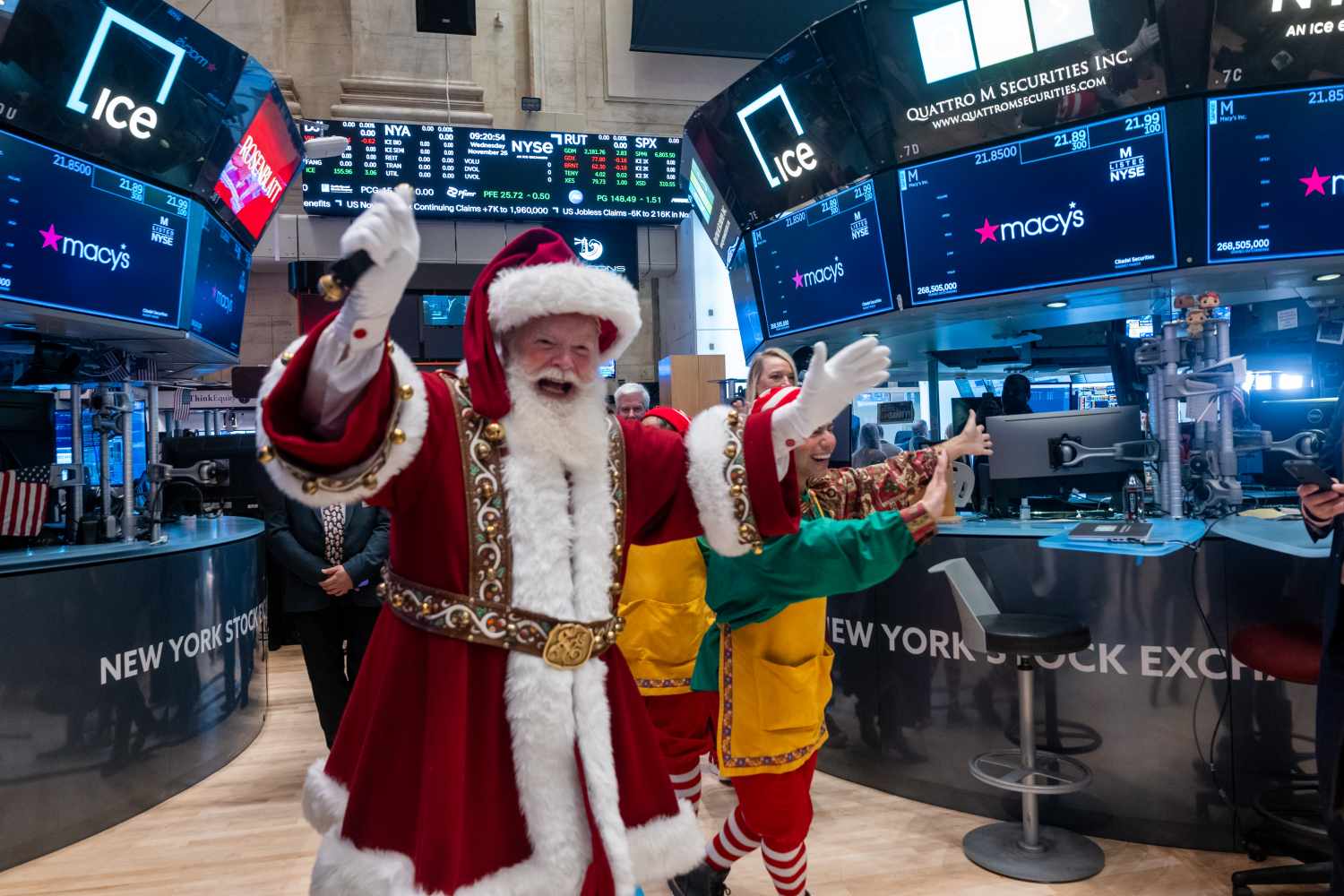
The U.S. markets are in a careful optimistic mood going into Christmas Eve trade with economic growth that was higher than expected, increased new highs in the stock market, and new stances in technology stocks.
Stocks will be closed at 1 p.m. ET on Christmas Eve and bond markets will be closed at 2 p.m. ET, which predetermines lighter volumes and greater sensitivity to headlines.
U.S. Economy Grows Faster Than Expected as Consumers Keep Spending
The U.S. economy has grown at a healthy rate of 4.3 per cent annually during the third quarter, with a preliminary reading provided by the Commerce Department after more than two months’ delay due to the government shutdown. The rate of growth was higher than the economists expected and it highlighted the strength of the American consumer.
In the third quarter, consumer spending increased by 3.5 per cent, at a faster rate compared to 2.5 per cent in the second quarter. The data refers to the parents still spending even though there are high interest rates, and there is a constant worry of inflation and an increase in household debt.
A preliminary report released by Visa stated that holiday re, whichspending increased by 4.2 percent with holiday sales in e-commerce and electronics demanded. The expenditure spurt was, however, at a price. LendingTree estimates a 37 percent holiday debt among the US that was estimated to be 1,223 on average, and $1,181 last year.
Although the robust GDP figures have reinforced this momentum in the economy, it has also made predicting of the monetary policy complex. The biggest worry to the investors is that a prolonged economic robustness will decrease the chances of interest-rate decreases early in 2026, especially with inflation being stubborn.
Stocks Steady After S&P 500 Hits Fresh Record
Markets were quiet in the morning on Wednesday, in spite of the hotter than expected growth rates. The stock futures and the Treasury yield changed very little because the investors were processing the data without panicking.

The S & P 500 made yet another record high, supported by sustained growth in technology shares. Precious metals further rallied to near record levels with investors continuing to hedge against inflation and the uncertainty in geopolitical matters over the long term.
Corporate dealmaking contributed to the international market story overseas. BP also sold a 65 percent majority to its Castrol lubricants division to Stonepeak in a deal worth $6 billion, an action that demonstrates a fresh emphasis on benchmarking among energy powerhouses.
Student Loan Collections Set to Resume Under Trump Administration
Away from markets, policy developments took center stage as the Trump administration announced it will begin garnishing wages of student loan borrowers in default starting in early January.
The move marks the first time since the onset of the Covid pandemic that defaulted borrowers’ paychecks will face automatic deductions. The Education Department estimates that approximately 1,000 borrowers will start getting wage garnishment notices during the first full week of January, and millions more could be impacted in the long term.
Over 5 million borrowers default now, which indicates the magnitude of the problem once federal student loans collections start again after the years of the pandemic. The policy change can affect consumer spending in 2026, particularly those of lower income families.
U.S. Delays China Semiconductor Tariffs, Signaling Softer Trade Tone
As another significant twist on trade policy, the U.S. stated it would not increase tariffs on Chinese semiconductor imports until June 2027, as identified in a Federal Register filing by the Office of the U.S. Trade Representative.
Under the plan, at least 18 months will have zero tariffs on Chinese imports of semiconductors, providing temporary relief to firms dependent on cross-border chip supply chains.
This ruling comes after a year-long probe into the semiconductor practices of China, which found that Beijing has been engaging in unfair trade practices. But there is a message within the delay, being that they want to de-escalate trade tensions in order not to trigger them off right away, as the U.S. weighs domestic chip spending with the realities of global supply.
For technology companies and manufacturers, the pause provides short-term certainty and may reduce cost pressures while U.S. onshoring efforts continue.
ServiceNow Makes Big Bet on Cybersecurity With Armis Deal
In corporate news, ServiceNow announced it will acquire cybersecurity startup Armis for $7.75 billion in cash, marking one of the largest software deals of the year.
The acquisition reflects ServiceNow’s ambition to expand its cybersecurity footprint as enterprises grapple with rising threats in an increasingly AI-driven digital environment. CEO Bill McDermott said the deal positions the company to offer a comprehensive “AI control tower” that integrates workflows, security and operational decision-making across complex IT environments.
The move highlights a broader trend of large software companies seeking to embed security capabilities directly into enterprise platforms rather than relying on third-party tools.
Tech Leadership Returns as Investors Reassess AI Spending
Technology stocks are regaining leadership after a season of patchy performance in the first half of the year. The semiconductor and cloud-based names have recovered as investor confidence in long-term artificial intelligence demand has grown despite a constantly increasing concern over spending in the short term.
NVIDIA has been the center stage. It is seen as an indicator of investor trust in AI infrastructure despite capital spending increases across hyperscalers. The resilience in technology contributed to the resurgence of the S&P 500 to new highs and the strength as the main growth engine in the market.
Nevertheless, portfolio managers are still picky and prefer companies that have a strong future of profitability over AI speculation.
Holiday Trading Brings Lower Volume, Higher Sensitivity
As markets close early on Christmas Eve and remain shut on Christmas Day, trading volume is likely to fall. Lower liquidity can amplify price swings and make markets more sensitive to unexpected news.
As a result, many investors are rebalancing their portfolios in the final days of 2025 rather than opening new large positions. Attention is now shifting to 2026, with a focus on interest rates, economic resilience, and the sustainability of earnings growth.