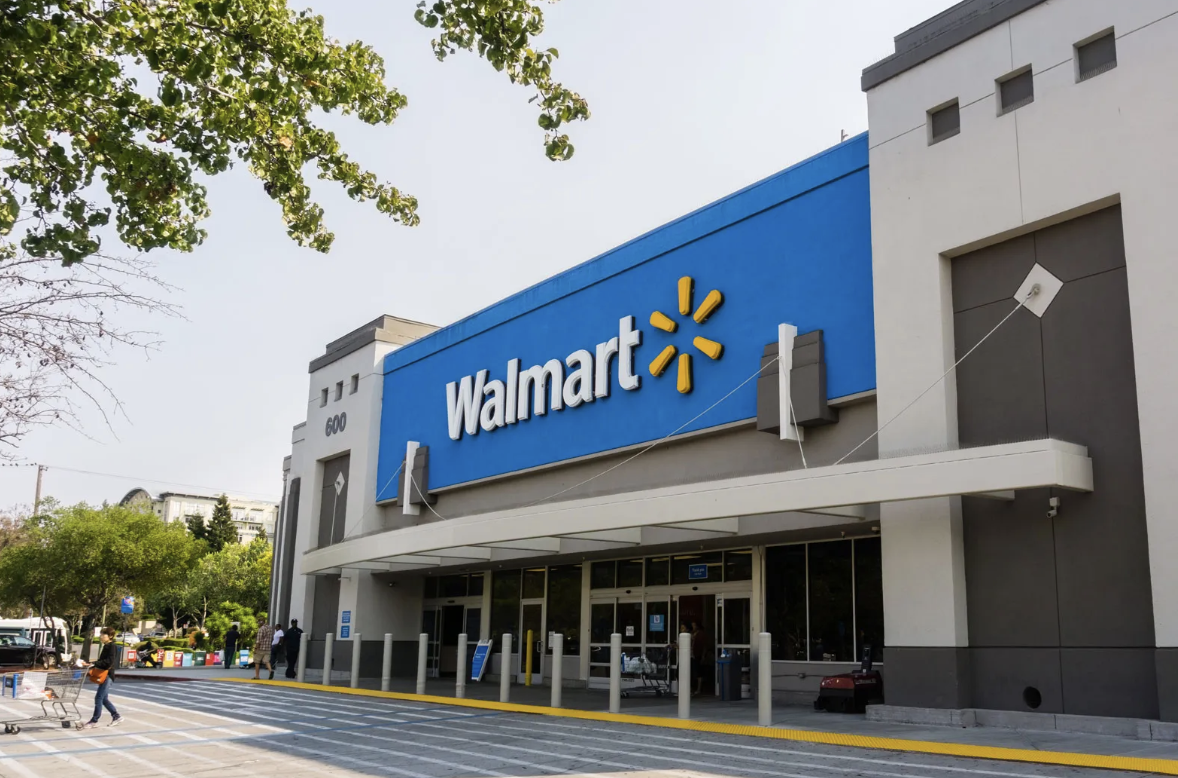
Walmart is getting ready to publish its fiscal third-quarter earnings, ahead of the market opening on Thursday, producing possibly the clearest report yet of the state of the American consumer. In the midst of the holiday shopping season, and other key retailers ringing alarms of caution, investors are looking to know whether Walmart can keep on or whether cracks in consumer spending are starting to appear.
Analysts Expect Stable Results as Walmart Reflects U.S. Consumer Health
Analyst predictions, as complied by LSEG, show that Walmart will record 60 cents per share revenues totaling $177.43 billion in the third quarter, as projected by Wall Street. Being the largest retailer, and the largest grocer in the country, Walmart has found itself in a special place on the American economy radar and as an indicator of how various layers of income earners are coping with inflation issues, the impact of government policies, and the changing spending trends.
The wide range of customers that Walmart has deals with includes millions of households whose customers depend on the benefits of Supplemental Nutrition Assistance Program. The longtime federal government shutdown provisionally cut those who obtain the aid this quarter, bringing into doubt whether the interruption influenced the grocery traffic or spending habits at Walmart.
Meanwhile, Walmart has gained higher income earners as customers in the last one year, the change being influenced by consistent inflation of food prices and individual developments of the company in store design, quickness of delivery and online convenience.
Retail Peers Turn Cautious as Consumers Pull Back on Big Purchases
The earnings report of Walmart comes at the end of a week which was characterized by both positive and negative undertones by its competitors. The same tendency was marked by Target, Home Depot and Lowe all releasing more cautious full-year forecasts. These retailers observed that shoppers visit stores less and that they are shopping necessities and get discounts wherever they can.
The recent performance of Home Depot showed declining demand in residential expenditures, which in most cases perform better when consumers are stable economically. In a similar manner, Target also reduced their expectations about profits, claiming there was a marked shift among customers towards deals and not the everyday purchases. Even lowered its forecasts due to economic uncertainty that cast its weight over the renovations and home related projects.
Contrastingly, the TJX Companies, which are the owners of T.J. Maxx and Marshalls, increased its outlook on a full-year basis. Sellers The off-price retailer has been advantageous because of shoppers making trade-offs with their more constrained budgets to cheaper stores during holidays. That good beginning of the season points to the growing gap in the retail world: the cheaper end of the retail industry is gaining more attention, and the mid-range chains are under pressure.
In this context, future performance of Walmart is even heavier. Walmart will tend to take on consumer volatility more than its competitors because the company is a large-scale everyday-value retailer. Investors are waiting carefully to know whether the company will keep performing or weep to reflect the same concerns voiced by the rest of the industry.
Walmart Raised its Forecast Earlier This Year—Will It Hold?
In August, Walmart increased its sales and profit forecasts great power on a full-year basis, indicating that it has confidence in consumer spending and its own strategic plans. The retailer estimated a growth of net sales percentage ranging between 3.75% and 4.75% in the fiscal year and anticipated adjusted earnings per share to be between 2.52 and 2.62.
The Chief Financial Officer of Walmart John David Rainey at the time informed CNBC that the company was not seeing significant shifts in the behavior of shoppers. Macroeconomic fears and months of incessant inflation could not deter Rainey because consumers are described as very resilient. It is still unknown whether that strength persisted into the fall. Broader market sentiment has also turned cautious in recent weeks, reflecting growing concerns about economic resilience and shifts in consumer behavior.
There are also a series of short-term variables that could have affected the performance in the third quarter. The government-imposed SNAP benefits suspension due to the government shutdowns would have taken a toll on the low-income shoppers. In the meantime, high-income households might have shifted their expenditure toward the expanding services at Walmart in grocery pickup, same-day delivery, and the enhanced offerings of personal label products.
Also, investments of the company in remodeling the stores and the growth of the omnichannel might remain appealing to customers who might have traditionally visited specialty retailers or even local supermarkets.
The update of the guidance given by Walmart on Thursday will be carefully inspected. Provided the retailer sticks to its full-year expectations, it is possible that it indicates the robust consumer demand continues to be strong even with the escalated economic uncertainty. Should Walmart reduce its projections, as most of its rivals did, then this would validate a slowdown in a larger scale going into the holidays.
Leadership Change Adds Another Layer of Interest
The companies following report is also the first one since the company announced such a significant change in the leadership. On February 1, Walmart U.S. CEO John Furner will replace the longtime Walmart CEO Doug McMillon. McMillon has seen the retailer through the ten years of significant change characterized by enormous investments into e-commerce, supply chain modernization, and the fresh emphasis on omnichannel efficiency.
During the tenure of McMillon, Walmart shares have increased over 300 percent showing the firm confidence of the investors in the capacity of the company to meet the new technology changes and the new demands of consumers. Furner who now manages the operations of Walmart in the United States has been critical in the recent achievements such as the better store experiences, quicker fulfillment opportunities, and better digital results.
High Stakes as Walmart Kicks Off the Holiday Season
In addition to providing insight into consumer sentiment, the report by Walmart can help provide a preview of how the holiday season can appear to the rest of the retail industry. This is traditionally the banner of such a significant part of the cash turnover each year, and retailers already have to confront increased competition, rising discounting, and price-conscious customers.
Walmart’s performance in November and December will likely dictate broader retail momentum, especially as inflation moderates but still affects categories such as food, home essentials, and apparel. Recent volatility in major indexes has shown how quickly markets react when consumer-facing sectors show signs of strain. The company’s ability to manage pricing, maintain inventory, and keep up with delivery timelines will determine whether it can capitalize on its strong market position.
If Walmart shows consistent growth and confidence in its outlook, it may reinforce the view that American consumers remain resilient. If the retailer signals caution, it could set off concerns across the sector and hint at a tougher-than-expected holiday quarter.
For now, all eyes are on Thursday morning, when Walmart will reveal whether consumers are still opening their wallets—or closing them as economic pressures tighten.